Best Midweight Base Layer for Cold-Weather Work
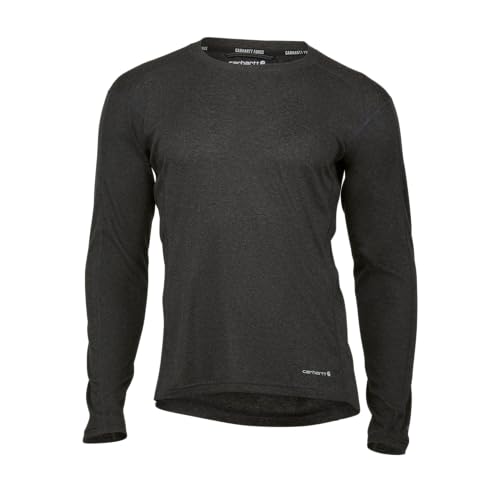
Five midweight base layers compared on fabric weight, fibre and fit — from a 170 GSM synthetic work crew to a 250 g/m² merino set built for long cold days.

By Elsie DuncanUpdated 15 min read
On this page
- Best midweight base layer at a glance
- How I screened the picks down to five
- What midweight actually means in grams per square metre
- 1. Carhartt Men's Force Midweight Stretch Base Layer Crewneck — Best overall
- 2. Merino.tech 100% Merino Wool Base Layer Men Set — Best for families
- 3. Carhartt Men's Force Midweight Stretch Base Layer Pant — Best budget pick
- 4. CL convallaria Mens Thermal Underwear Long Johns Set — Most versatile
- 5. Merino.tech Merino Wool Base Layer Women Set — Best premium
- Merino wool or synthetic: which fibre suits your day?
- How should a midweight base layer fit?
- Care, laundry and how long a set really lasts
- The verdict
- FAQ
The best midweight base layer for cold-weather work is the Carhartt Force Midweight Stretch Base Layer Crewneck, a 170 GSM synthetic crew with FastDry wicking, flatlock seams and concealed thumb loops. If you want natural wool warmth in a matched top-and-bottom set, the Merino.tech 250 g/m² Merino Wool Base Layer Men Set is the better buy, though it costs more and needs hand washing.
Most shoppers pick a base layer by brand or by look. Neither decides it. Fabric weight in grams per square metre does, and once you know your GSM number the field narrows fast. This roundup lines up five midweight options across synthetic and merino, and pairs each one to the day it's actually built for.
Best midweight base layer at a glance
| Pick | Fabric | Weight | Price |
|---|---|---|---|
Best overall Carhartt Force Midweight Stretch Crewneck |
Synthetic stretch with brushed interior | 170 GSM | Check Price |
Best for families Merino.tech Merino Wool Base Layer Men Set |
100% merino wool, 17.5 micron | 250 g/m² (top + bottom) | Check Price |
Best budget pick Carhartt Force Midweight Stretch Pant |
Synthetic stretch, brushed elastic waist | 170 GSM | Check Price |
Most versatile CL convallaria Thermal Underwear Set |
90% polyester, 10% spandex | Not listed (top + bottom) | Check Price |
Best premium Merino.tech Merino Wool Base Layer Women Set |
100% merino wool, 17.5 micron | 250 g/m² (top + bottom) | Check Price |


How I screened the picks down to five
I started with several dozen listings tagged as midweight thermal or base layer tops and bottoms, then cut hard. Anything without a stated fabric weight, a clear fibre content or a defined size range went first. Anything sold as a novelty or a costume went with it. What survived split into two camps: synthetic stretch pieces built around wicking, and merino wool sets built around warmth-to-weight. I kept examples of both, and I kept a mid-priced polyester-spandex set to represent the two-piece budget tier that dominates this search.
That left five picks, three sold as separates and two sold as matched top-and-bottom sets. Two of the five publish a fabric weight in the numeric form a buyer can compare across brands. Two more publish it as 250 g/m² and label the tier as midweight in the same sentence. One does not publish a weight at all, and that shows up in the analysis below.
A note on the search itself: "best midweight base layer" is a mixed intent. Some shoppers want a crew top, some want long johns, some want a matched set. This roundup covers all three, and the pick order tells you which suits which day.
What midweight actually means in grams per square metre
Fabric weight is measured in grams per square metre, written GSM or g/m². It's the single number that separates lightweight, midweight and heavyweight base layers, and every serious merino brand publishes it. Merino.tech states the three tiers plainly: 165 g/m² lightweight, 250 g/m² midweight, 320 g/m² heavyweight. That gives you a real cutoff to shop by.
Synthetic weights land lower for the same warmth class, because polyester traps less air per gram than wool. The two Carhartt Force pieces publish 170 GSM, and both are labelled midweight. That's not a contradiction. A 170 GSM synthetic and a 250 g/m² merino are aimed at similar temperature ranges, roughly the aerobic side of cold weather where you're moving hard and want wicking to outrun sweat.
Here's the trick with midweight most shoppers miss:
- Under 200 GSM synthetic is midweight for active days in the cold.
- 250 g/m² merino is the true midweight benchmark for wool.
- Above 300 g/m² merino you're into heavyweight territory for sedentary cold, not for skiing or working.
Skip a listing that calls itself midweight without publishing a number. You cannot compare what a brand will not measure.
1. Carhartt Men's Force Midweight Stretch Base Layer Crewneck — Best overall
A 170 GSM synthetic crew built for cold work that swings between hot and cold through the day.
Best for: cold-weather work and active days that swing hot and cold Skip it if: you want a matched top-and-bottom set in one purchase
Carhartt lists this crew at 170 GSM, right in the middle of the synthetic midweight range, and pairs it with what the brand calls Force technology for wicking and FastDry for sweat evaporation. The brushed interior is the specification that matters for cold hands and cold trucks, because it puts a softer face against the skin than a plain jersey knit. Flatlock seams sit flat against the body, which is what you want under a stiff work shell or a ski jacket that would otherwise chew a raised seam into your shoulder blade over eight hours.
The concealed thumb loops keep the sleeve pinned inside a glove cuff, and the locker loops are a small nod to worksite storage. It's sold as a single top, X-Large in Black Heather in the size and colour published here, and only one seller lists it. Against the two merino sets in this roundup, it gives up natural odour resistance and top-plus-bottom coverage, but it wins on price position, on machine-wash convenience, and on the sheer specificity of what it's designed for.
Pros:
- 170 GSM published weight lands mid-range for synthetic
- Brushed interior for skin comfort under stiff shells
- Concealed thumb loops keep sleeves under glove cuffs
- Flatlock seams reduce chafing over long shifts
- FastDry wicking for high-output cold work
Cons:
- Sold as a top only, no matched bottom
- Synthetic, so it will pick up odour faster than wool
- Only one seller lists it, limiting size availability
2. Merino.tech 100% Merino Wool Base Layer Men Set — Best for families
A matched merino top-and-bottom at 250 g/m², built around natural warmth and odour resistance.

Best for: buyers who want a merino top and bottom in one purchase Skip it if: you prefer machine-wash convenience
This is the natural-fibre answer in the roundup. Merino.tech publishes the fabric weight as 250 g/m², calls that its midweight tier, and states the yarn as 100% Superfine 17.5 Micron merino. That micron number matters more than most buyers realise: fibres finer than about 18 microns rarely trigger the itch response, which is why the brand can claim all-day comfort against the skin. The set includes both the top and the long johns in one purchase, and the sales rank suggests it moves through the category faster than the two Carhartt separates here.
Wool brings two things a synthetic cannot match. It absorbs moisture into the fibre rather than sitting damp against the skin, and it resists odour on multi-day trips where you cannot launder daily. The trade-off is care: Merino.tech specifies hand wash and lay flat to air dry, so a tumble dryer on hot will felt the fabric. If you're buying for a family that skis or hikes on winter weekends and re-wears kit between washes, that trade is easy. If your base layer lives in the daily laundry cycle with everything else, it isn't.
Pros:
- Matched top and bottom in one purchase
- 250 g/m² true midweight for merino
- 17.5 micron yarn stated for no-itch comfort
- Natural odour resistance for multi-day wear
- Backed by the brand's satisfaction promise
Cons:
- Hand wash and air dry only
- Premium price position in this set
- Wool needs more care than synthetic on the road
3. Carhartt Men's Force Midweight Stretch Base Layer Pant — Best budget pick
The bottom half of the Force system at 170 GSM, and the cheapest of the five.

Best for: layering under work pants or ski shells at 170 GSM Skip it if: you need a matching top with the same fabric
Bought alone, this is the cheapest pick in the roundup, and it uses the same 170 GSM fabric and Force wicking as the crew above. The brushed elastic waistband is the detail worth pointing to, because a plain elastic waist under a work belt for ten hours will leave a mark you can still see at dinner. The contoured front with fly is the specification that separates a real base-layer pant from a pair of thin sweatpants dressed up in marketing.
Where it fits in the set: this is the piece you buy when you already own a base-layer top and only need the bottom, or when you want to build a mixed-brand system rather than commit to a matched set. Against the two merino sets, it gives up the natural fibre and the matched top, but it wins on the price position and on the machine-wash simplicity you get from any synthetic. Against the CL convallaria set below, it gives up the matching top but wins on the published fabric weight, which is the number a buyer actually needs.
Pros:
- Cheapest of the five picks
- 170 GSM matches the Force crew for a mixed system
- Brushed elastic waistband for long shifts
- Contoured front with fly, not a plain elastic waist
- FastDry wicking and flatlock seams throughout
Cons:
- Sold as a pant only, no matched top
- Synthetic will hold odour more than wool
- One seller listed, so stock and sizes are thin
4. CL convallaria Mens Thermal Underwear Long Johns Set — Most versatile
A two-piece polyester-spandex set aimed at hunting, camping and winter sport.

Best for: hunters, campers and skiers who want a two-piece synthetic set Skip it if: you want a published fabric weight in GSM
This is the middle-priced pick and the only synthetic sold as a matched top-and-bottom in the roundup. The listing states 90% polyester and 10% spandex, and it makes claims about four-way stretch, tagless construction, moisture wicking and dyeing fastness through multiple washes. The count is 2, meaning the top and the bottom, and it's pitched at hunting, camping, snowboarding, skiing, cycling and running by the brand.
Here's where the honesty comes in. Unlike both Carhartts and both Merino.techs, this listing does not publish a fabric weight in GSM. That's a real gap in a category where GSM is the deciding number, and it's the reason this pick lands at fourth rather than higher. Buy it if you want the two-piece synthetic option and you're willing to judge weight by the photos and by touch on arrival. Skip it if you want to line up the numbers against a merino set and know where you're landing on the warmth curve. The 10% spandex is genuinely useful for range of motion in a hunting stand or on a skin track, so the trade-off is not zero: you gain stretch and a matched set, you lose the number.
Pros:
- Matched top and bottom in a mid price position
- 10% spandex for real four-way stretch
- Tagless construction across both pieces
- Pitched at multiple cold-weather sports
- Easy-care synthetic, machine friendly
Cons:
- No published GSM figure to compare
- Colour codes on the listing are hard to parse
- Polyester will hold odour more than wool
5. Merino.tech Merino Wool Base Layer Women Set — Best premium
The women's-cut merino set at 250 g/m², built for long cold days on and off the slope.

Best for: women who want a 250 g/m² merino set for skiing and long cold days Skip it if: you're shopping for a men's cut
This is the women's version of the Merino.tech midweight system, and it uses the same fabric spec as the men's set: 250 g/m² merino wool at 17.5 microns, sold as a matched top-and-bottom. The cut is the reason it earns its own entry rather than being folded into pick two. Base-layer fit matters more on wool than on synthetic, because wool relies on contact with the skin to warm efficiently. A men's cut on a woman's frame leaves gaps at the waist and the underarm that a synthetic would forgive but wool will not.
It's the most expensive pick in this roundup, and that's the honest trade-off. What the money buys is the natural fibre, the matched set, the finer yarn micron, and a cut that keeps the fabric against the skin where it needs to be. Care is the same as the men's set: hand wash, lay flat to air dry. If you ski, ice climb or work outdoors regularly through winter and you're prepared to launder wool the way wool wants to be laundered, this is the pick that will still be in your drawer three seasons from now. Against the CL convallaria set, it gives up machine-wash simplicity and the mid price position, but it wins on published weight, on fibre and on fit.
Pros:
- Women's-specific cut for wool contact fit
- 250 g/m² true midweight for merino
- 17.5 micron yarn for no-itch comfort
- Matched top and bottom in one purchase
- Natural odour resistance for repeat wear
Cons:
- The most expensive pick in this set
- Hand wash and air dry only
- Wool care is stricter than synthetic
Merino wool or synthetic: which fibre suits your day?
Fibre choice is the second decision after weight, and it splits along how you spend the day rather than how cold it is.
Merino wool is the answer when you sweat in pulses rather than continuously, when you cannot launder daily, and when the smell of a synthetic after two days would be a problem. It absorbs up to a third of its weight in moisture into the fibre before it feels damp on the skin, and the odour-resistance claim on the Merino.tech listings is a real thing about wool rather than marketing. The cost is care: hand wash, lay flat to air dry, no tumble dryer.
Synthetic is the answer when you sweat hard and continuously, when you launder daily, and when you want a garment that shrugs off a machine wash on cold. The Carhartt Force pieces are built around this: FastDry wicking, flatlock seams and a brushed interior that dries fast between shifts. Synthetic wicks moisture through the fabric to the outer surface, where it evaporates, which is why it feels drier during high-output effort even though it holds less water than wool.
The mixed answer is a polyester-spandex blend like the CL convallaria set, which trades a little pure wicking for stretch. That's a real gain if your day involves reach, squat and stride under a shell.
How should a midweight base layer fit?
A midweight base layer should sit snug against the skin with no bunching at the waist, the wrists or the ankles, but it should not compress. Compression is a different garment class and it works against the air-trapping warmth that base layers are built on.
Three checks that catch a bad fit on arrival:
- Raise both arms overhead. The hem should stay tucked, not ride up past the belly button.
- Squat fully. The waistband should not pull down at the back, and the knees should not bag out.
- Run a hand down the sleeve. The fabric should follow the arm without gathering at the elbow crease.
Concealed thumb loops, like the ones on the Carhartt Force crew, are useful for sleeve retention inside a glove cuff. A brushed elastic waistband, like the one on the Force pant, sits better under a work belt or a hip belt than a plain elastic. Wool sets like the two Merino.techs rely more on contact with the skin, which is why the women's cut matters as much as it does.
Care, laundry and how long a set really lasts
Care is where most base layers die early, and the two fibre camps want different treatment.
For synthetic pieces like the Carhartts and the CL convallaria set: machine wash cold, gentle cycle, no fabric softener. Softener coats the fibres and kills the wicking. Tumble dry low or hang dry. A synthetic base layer treated this way will hold its wicking for a couple of hundred wash cycles, which is several seasons of hard use.
For the two Merino.tech sets: hand wash cold, lay flat to air dry. That is what the brand specifies, and wool responds to it. A tumble dryer on hot will felt the fabric and shrink the garment a full size, and it will not recover.
One shared rule across both camps: wash inside out, and never wash a base layer with anything carrying velcro. The hook side will pull loops out of the knit face, and a base layer with pulled loops will keep pilling forever. Two of the picks here mention odour resistance, but both wool sets will outlast both synthetics on the multi-day trip test where laundry isn't an option.
The verdict
The best midweight base layer for cold-weather work is the Carhartt Men's Force Midweight Stretch Base Layer Crewneck. It publishes its fabric weight at 170 GSM, it uses a brushed interior against the skin, and it adds the concealed thumb loops and flatlock seams that a working day actually needs. It's a top only, which is the trade you make for the price position and the specificity of the design.
Two conditions flip that pick. If you want a matched top-and-bottom set in one purchase and you're willing to hand-wash wool, the Merino.tech Men Set at 250 g/m² is the better buy: natural fibre, odour resistance and a 17.5 micron yarn that stays comfortable on the skin. If you want the same natural-fibre answer in a women's cut, the Merino.tech Women Set at the same 250 g/m² weight is the pick, and it earns the premium position with a fit that keeps wool against the skin where it needs to be. The CL convallaria set is the mid-priced synthetic two-piece for buyers who want stretch and a matched set without wool care, and the Carhartt Force pant is the way in when the budget is tight and you only need the bottom.
FAQ
What GSM counts as a midweight base layer?
A midweight base layer sits around 250 g/m² for merino wool and around 170 GSM for synthetic, based on the two brands in this roundup that publish the number. Merino.tech states its three tiers as 165 g/m² lightweight, 250 g/m² midweight and 320 g/m² heavyweight. Carhartt labels its 170 GSM Force pieces as midweight. Both aim at the aerobic side of cold weather.
Is a midweight base layer worth it over a lightweight?
A midweight base layer is worth it over a lightweight when the temperature drops below the aerobic sweet spot of a 165 g/m² lightweight and you still need to move hard. The extra 85 g/m² of fabric on a 250 g/m² merino set traps more warm air without pushing you into the heavyweight tier meant for sedentary cold. Skiers, hunters and outdoor workers usually land here.
Merino.tech men set or Carhartt Force crew?
The Merino.tech men set gives you a matched merino top and bottom at 250 g/m², natural odour resistance and a 17.5 micron yarn, but it needs hand washing. The Carhartt Force crew gives you a 170 GSM synthetic top only, with FastDry wicking, flatlock seams and concealed thumb loops, and it takes a machine wash. Choose merino for multi-day trips, synthetic for daily hard use.
Can I machine wash a midweight base layer?
You can machine wash a midweight base layer when it's synthetic: the Carhartt Force pieces and the CL convallaria set all tolerate a cold gentle cycle with no fabric softener. You cannot machine wash the two Merino.tech merino sets. Both list hand wash and lay flat to air dry, and a hot tumble dry will felt and shrink wool a full size with no way back.
Do I need a matched set or can I mix brands?
You can mix brands freely across a midweight base layer system, and many buyers do. Pair the Carhartt Force crew at 170 GSM with the Carhartt Force pant at the same weight for a coherent synthetic setup, or run a Merino.tech top with a synthetic bottom if your legs sweat more than your torso. The only rule is matching the weight tier top to bottom.
Pick the fibre first, then the weight tier, then the cut. The Carhartt Force crew wins this roundup because it does one job at 170 GSM and does it precisely for the cold-weather worker who launders daily and needs sleeves that stay under glove cuffs. The two Merino.tech sets are the answer when you want a matched top-and-bottom and you're willing to hand-wash wool, and the CL convallaria set fills the middle for buyers who want stretch and a two-piece synthetic. Whichever way you go, buy your true size: a midweight base layer only works when it sits against the skin.